
Asphalt or concrete. Built on the right base.
A driveway is a structure, not a finish. We engineer the sub-grade and base first, then place the surface — whether that's hot-mix asphalt or poured concrete. Done right, your driveway outlives the next roof.
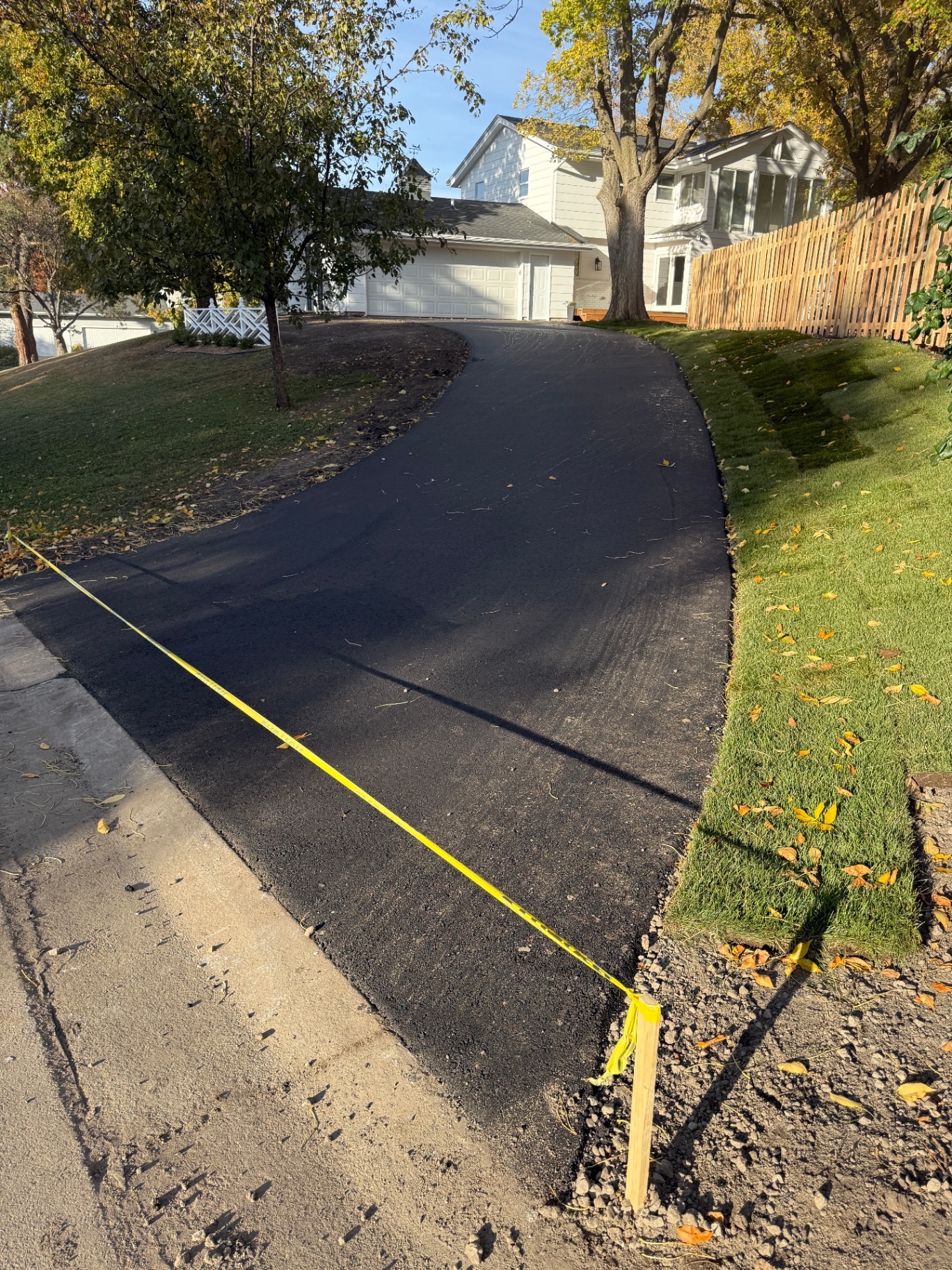
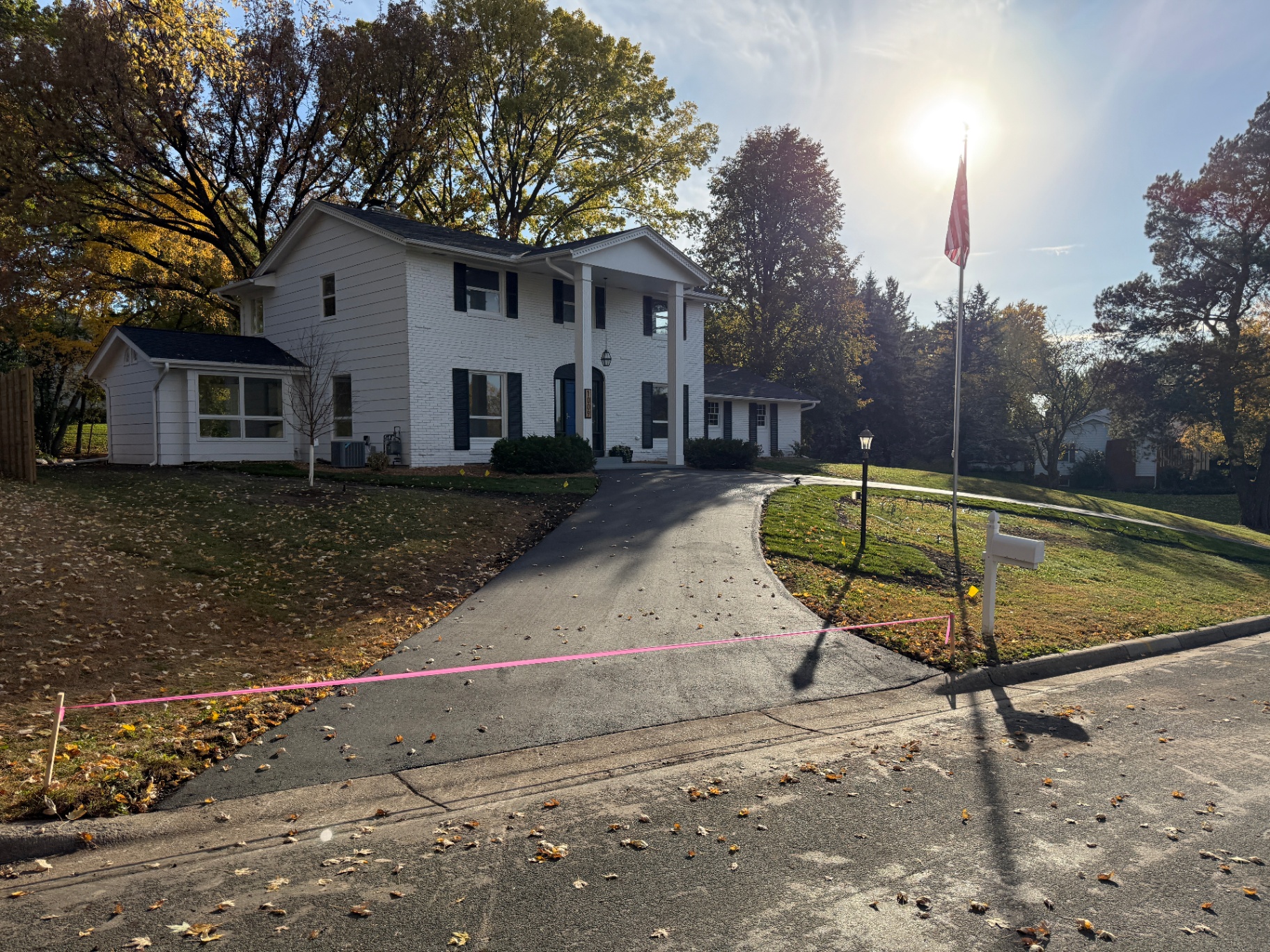
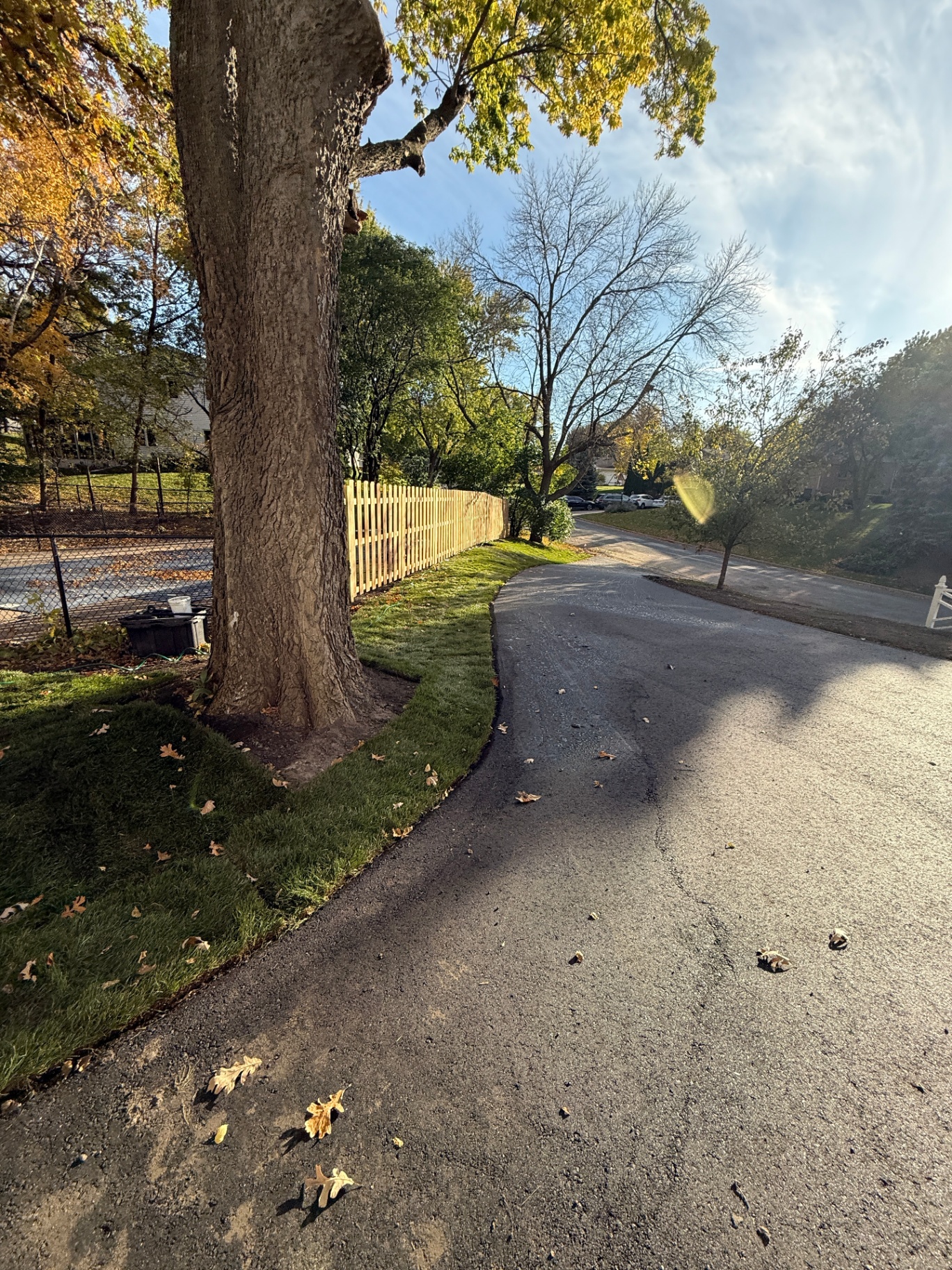
Full asphalt driveway replacement + textured concrete patio.
Tear-out of the original worn drive, re-graded sub-grade, fresh aggregate base, and a clean two-lift hot-mix asphalt pour with hand-tamped beveled edges. While the crew was on-site, we also poured a basic textured concrete patio in the back — one mobilization, two finished surfaces.
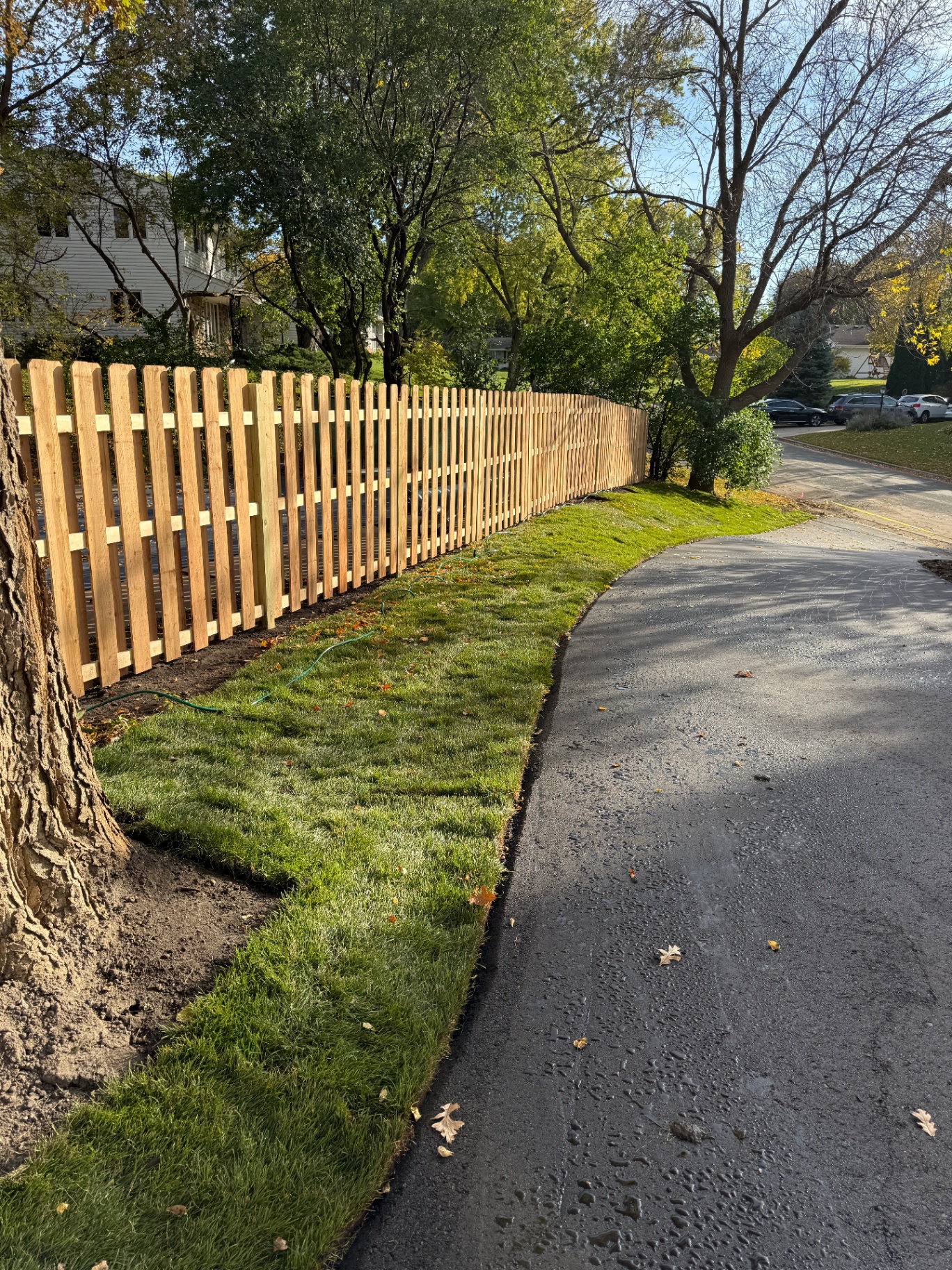
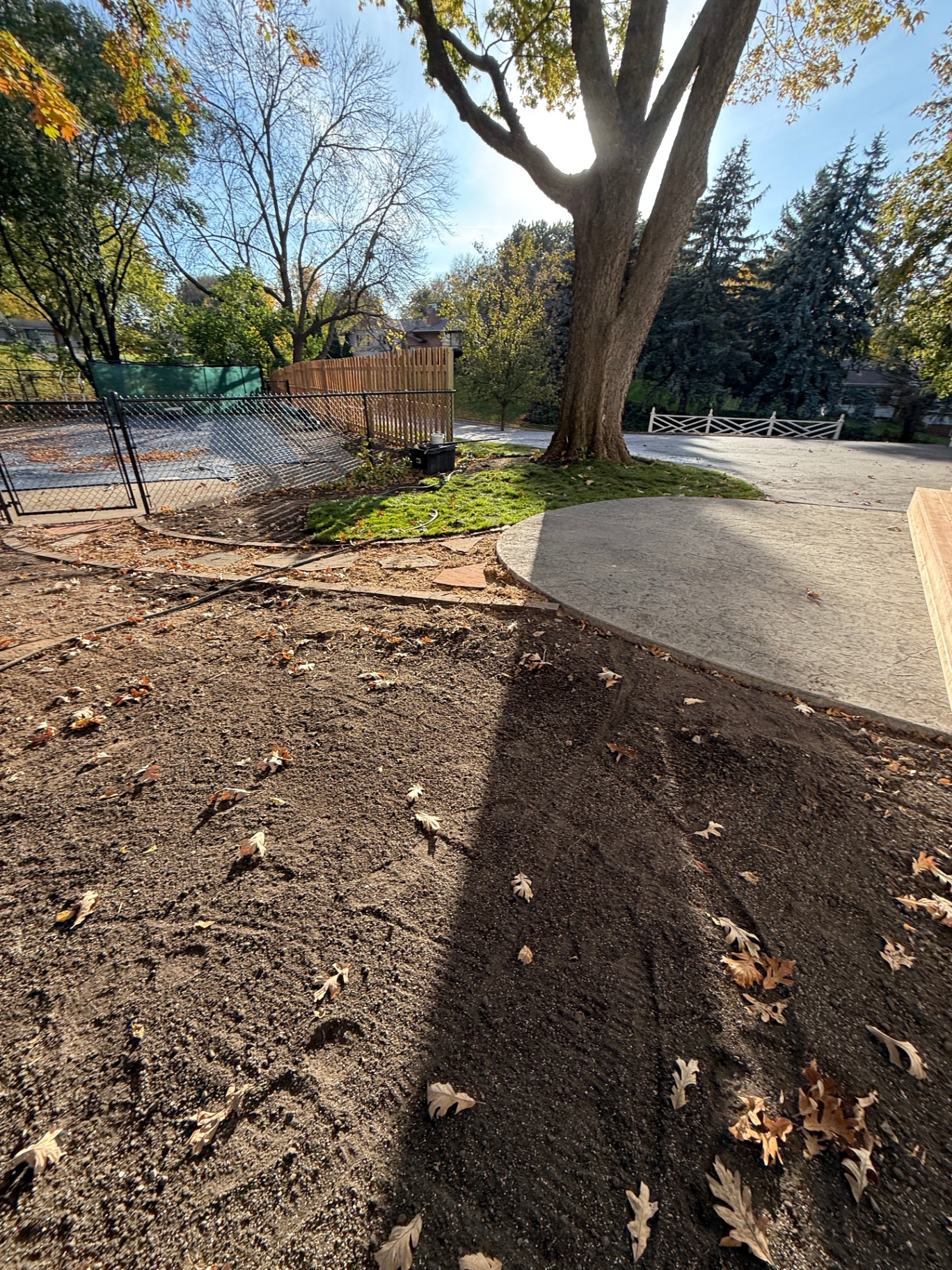
Basic textured concrete patio
A broom-finish textured concrete patio poured at the back of the property as part of the same mobilization. Same engineered base approach as the driveway — proper sub-grade, compacted Class 5, 4,000 PSI air-entrained mix, control joints cut within 24 hours, and a penetrating sealer scheduled for 28 days out.
- Broom texture for grip
- 4,000 PSI air-entrained mix
- Control joints ≤ 10' OC
- Sealed at 28 days
Asphalt vs. concrete — what actually matters.
| Factor | Asphalt | Concrete |
|---|---|---|
| Up-front cost | Lower | Higher (~40–60% more) |
| Lifespan in MN/WI | 15–20 years with seal coating | 25–40 years |
| Best for | Long runs, sloped sites, budget-conscious | Heavy vehicles, decorative finishes, low-maintenance |
| Cure / open to traffic | 24–48 hours | 7 days foot, 14 days vehicle |
| Maintenance | Seal coat every 3–5 years, crack fill | Re-seal every 3–5 years, joint maintenance |
| Cold-climate notes | Flexes with frost, easy to patch | Rigid — needs proper joints + sealer against road salt |
Asphalt driveways
Hot-mix asphalt is the workhorse of Upper Midwest driveways: it flexes with frost cycles, patches easily, and goes in fast. Done right, with a real base and proper compaction, a residential asphalt driveway will give you 15–20 years before it needs more than seal coating.
Site evaluation & layout
We measure the run, confirm slope and drainage, and stake the final width and edge lines. If an old driveway is being replaced, we plan the demo and disposal at the same time.
Excavation & engineered base
We excavate to depth, install woven geotextile where soils are soft, and lay 6–8" of compacted Class 5 aggregate base. The base is what makes a driveway last — not the surface.
Asphalt placement
Two-lift hot-mix asphalt — a coarse binder course followed by a finer wear course — totaling 3–4" compacted thickness for residential driveways. Edges are hand-tamped at a 45° bevel.
Drainage & tie-ins
Positive slope away from the home, a clean apron tie-in at the street, and swales or trench drains added where the grade requires it. Water is the #1 killer of asphalt.
Our asphalt spec
- 6–8" compacted Class 5 aggregate base
- 3–4" two-lift hot-mix asphalt
- Hand-tamped 45° beveled edges
- Minimum 1% slope for drainage
- Cure 24–48 hours before driving
- First seal coat recommended at 12 months
Concrete driveways
A properly designed concrete driveway is a 30-year structure. The trade-offs are higher up-front cost and a longer cure time, but in return you get a rigid slab that handles heavy vehicles, takes decorative finishes, and shrugs off day-to-day wear. The keys are mix design, reinforcement placement, and joint layout.
Layout, forms & sub-grade
We form the slab to your final dimensions, verify slope, and prep a uniformly compacted sub-grade. Soft or organic soils are excavated and replaced with engineered fill.
Base, vapor & reinforcement
4–6" of compacted Class 5 base, then #4 rebar on chairs in a grid (or fiber-mesh + rebar around the perimeter), positioned in the upper third of the slab.
Pour, screed & finish
4,000+ PSI air-entrained mix poured at 5" thickness (6" where vehicles turn or park heavy). Screed, bull-float, edge, broom finish for grip, then jointed.
Joints, cure & seal
Control joints cut within 24 hours at no more than 10' on center. Cure compound applied same-day. Penetrating sealer at 28 days to lock out water and de-icing salts.
Our concrete spec
- 4–6" compacted Class 5 aggregate base
- 5–6" slab thickness
- 4,000+ PSI air-entrained concrete
- #4 rebar grid or fiber + perimeter rebar
- Control joints at ≤ 10' on center
- Penetrating sealer at 28 days, then every 3–5 years
Typical project timeline
- 01Estimate
On-site measure and written proposal within 48 hours.
- 02Demo & prep
1–2 days. Old surface removed, sub-grade cut to depth.
- 03Base + pour/pave
1–2 days. Aggregate placed and compacted, then surface installed.
- 04Cure & open
Asphalt: 24–48 hrs. Concrete: 7 days foot, 14 days vehicle.
Most driveways are scheduled May through October in MN & WI for ideal cure conditions.
Let's price your driveway.
We'll measure, talk through asphalt vs. concrete for your site, and send a line-item quote with materials and timeline.